Programming toeholds
Published
"Every once in a while, your code works and you forget that you’re wasting your life in front of a computer." – @fortes
To design digital experiences, I'm learning to program working software again. Real data, real(istic) interactions – it's hard! Just when I think I've scaled a peak, I realize I'm only standing on the rubble at the base of Half Dome, looking up.
Each day I’ve reflected on how I tried to solve each problem. What can I do to save time tomorrow? There’s been little overlap between technologies and specific issues so far. The space feels vast and growing. The toeholds I have found are general lessons that have sped me up and cut down on a few shame spirals:
- Don’t get frustrated. Some difficulty is desirable, but I need a clear head to solve problems. Anger makes me miss things.
- Debug first by reading the code and following its flow of execution. Make sure I can articulate what I think it’s doing. Say it aloud. (Related: Do this before pasting any example code I find on the internets.)
- Listen to Chrome’s dev tools. Take its output seriously. I’m playing a game of hot-cold and Chrome is helping me cheat.
- Write out possible causes. Often just listing what I think might be happening is key to unlocking a fruitful new perspective to try.
- Don’t goose-chase other people’s problems. Google deliberately after doing the above. It’s easy to find similar examples that don’t turn out to apply to mine.
- Know my context. Which systems am I running? Which page version am I editing and viewing? Which frameworks and versions did I choose? Which scope is this code block nested within? Does this example assume the same context I’m in?
When I wasn’t methodical about a problem, I let this copy-pasted code snippet stump me for about a day. (I know.)
<script src="https://cdn.jsdelivr.net/npm/d3@7"></script>
<script src="https://cdn.jsdelivr.net/npm/@observablehq/plot@0.4"></script>
<script>
	document.body.appendChild(Plot.plot(options));
</script>
I bounced around writing and debugging elaborate approaches that were all downstream of the problem. I was flailing. An empty SVG was being inserted, the chart library was processing my data, but no chart was rendering.
When I went back and calmly read from the beginning, I realized document.body.appendChild() means, “in the document body, add something.” The 'something' Plot.plot(options) means, “use Plot to plot... options.” The rest of the example code did something, but “options” was a placeholder, basically “YOUR CODE HERE.” Derp. 🤦♂️
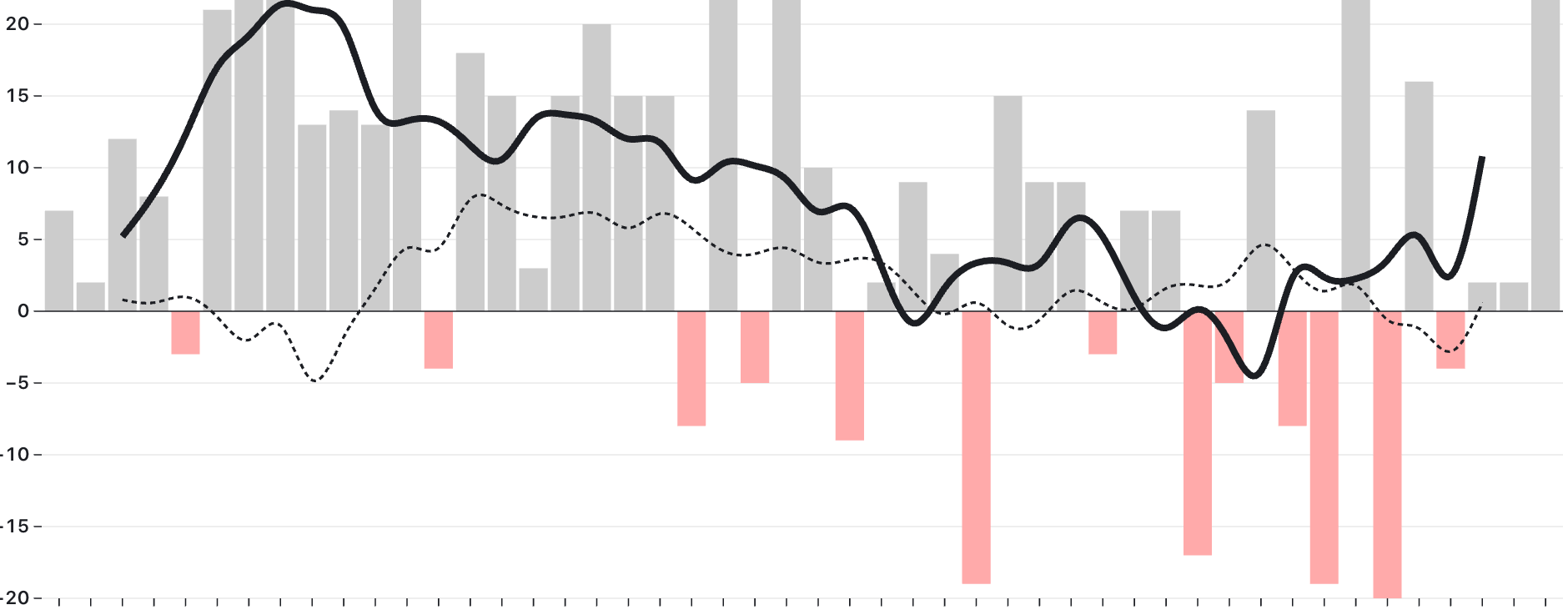
The next day, when trying to bind data to Plot outside of Observable, I was at the limit of my knowledge and public examples. By carefully stepping through core documentation, I was able to piece together D3's “promise” structure d3.json("/get-data").then((data) => { YOUR CODE HERE }) to interact with Plot. In just over one hour I'd climbed a tougher rock face. The toeholds worked and voilà, my charts rendered.
This list isn't intuition, yet, but I'm noticing more quickly when I stumble into an obstacle, then forcing myself to reuse it like a script. It keeps working, which is a thrill!